Every project comes with its own set of challenges. Here are some of the key challenges we encountered and how we solved them.
Product Compatibility and Selection
One of the major challenges was helping customers select the correct electric bicycle components. The website offers different motors, batteries, chargers, displays, and accessories, and not every component is compatible with every e-bike model. Providing clear specifications and compatibility information is important to prevent incorrect purchases and reduce product returns.
Website Navigation and Product Categorization
Managing a wide range of products and organizing them into suitable categories was another challenge. Customers need to find specific products quickly without browsing through many unrelated items. A clear navigation structure, meaningful category names, filters, and an effective search function can improve the overall shopping experience.
Product Information Management
Maintaining accurate and consistent product information requires considerable attention. Each product needs appropriate descriptions, technical specifications, images, pricing, availability, and compatibility details. Inaccurate or incomplete information can confuse customers, affect purchasing decisions, and increase customer support requests.
User Interface and User Experience
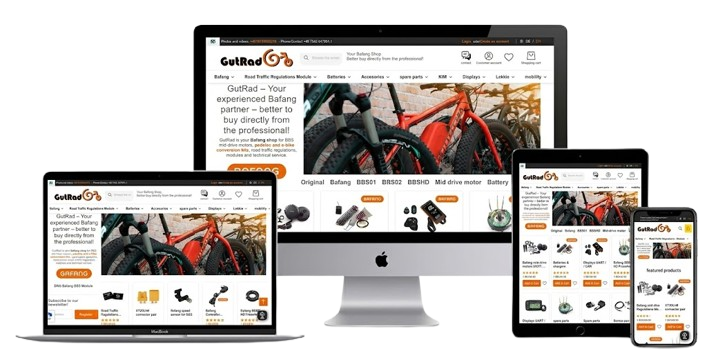
Designing a website that is simple, attractive, and easy to navigate can be challenging, especially when technical products contain complex specifications. Customers should be able to understand product details, compare options, and find important information without difficulty. The layout should also provide clear calls to action and a consistent shopping experience.
Mobile Responsiveness
Customers may access the website using smartphones, tablets, and desktop computers. Ensuring that menus, product images, filters, forms, and checkout pages work correctly across different screen sizes requires careful testing. Poor mobile usability can make product browsing difficult and discourage customers from completing their purchases.
Search Engine Optimization (SEO)
Improving the website's visibility in search engine results is an ongoing challenge. Specialized products often require detailed keywords, optimized product titles, useful descriptions, and relevant category content. Technical SEO, page speed, internal linking, and duplicate product descriptions also need attention to help search engines understand and index the website effectively.
Shopping Cart and Checkout Process
A smooth checkout process is essential for an e-commerce business. Customers need to review their selected products, confirm quantities, understand shipping charges, provide delivery details, and complete payment securely. Unclear costs, unnecessary steps, or technical errors can lead to abandoned carts and lost sales.
Inventory and Stock Management
Keeping product availability accurate can be difficult when many components and accessories are sold through the website. Stock information needs to remain consistent with warehouse inventory and incoming orders. Outdated stock information may result in customers ordering unavailable products, causing delays, cancellations, and dissatisfaction.
Website Performance and Loading Speed
Product pages often contain high-quality images, detailed specifications, and other content that can affect loading speed. Slow pages may frustrate visitors and make it harder to browse large catalogues. Performance optimization may involve image compression, caching, reducing unnecessary scripts, and improving server response times.
Customer Trust and Security
Building trust is particularly important when customers purchase technical equipment online. Customers need confidence in product authenticity, payment security, delivery arrangements, return policies, and warranty information. Clear policies, secure payment processing, transparent pricing, and accessible customer support help reduce uncertainty during the purchasing process.
Customer Support and Technical Assistance
Customers may need help understanding product specifications, identifying compatible parts, installing components, or resolving technical problems. Providing accurate and timely assistance can be challenging when products have different technical requirements. Clear FAQs, installation guides, troubleshooting articles, and responsive support channels can reduce confusion and improve customer satisfaction.
Shipping and Delivery Management
Delivering products efficiently requires coordination between order processing, warehouse operations, shipping providers, and customer communication. Some products may have specific packaging or handling requirements. Delays, incorrect delivery information, shipping costs, and limited tracking visibility can negatively affect the customer experience.
Product Comparison and Decision-Making
Customers may find it difficult to choose between similar motors, battery capacities, chargers, or accessories. Differences in voltage, power, compatibility, and technical features can be confusing for non-experts. Providing comparison tables, buying guides, specification filters, and clear explanations can help customers make informed purchasing decisions.
Maintaining and Updating the Website
An e-commerce website requires regular maintenance to keep its product catalogue, software, plugins, and security measures up to date. Updates must be tested carefully to avoid compatibility issues or interruptions to important features such as search, the shopping cart, and checkout. Regular monitoring and backups help support reliable website operation.
Website Analytics and Performance Monitoring
Understanding customer behavior is another challenge. Website analytics can help identify popular products, traffic sources, checkout drop-offs, and pages that need improvement. However, meaningful conclusions require correctly configured tracking and consistent analysis of performance indicators such as conversion rate, average order value, and customer retention.