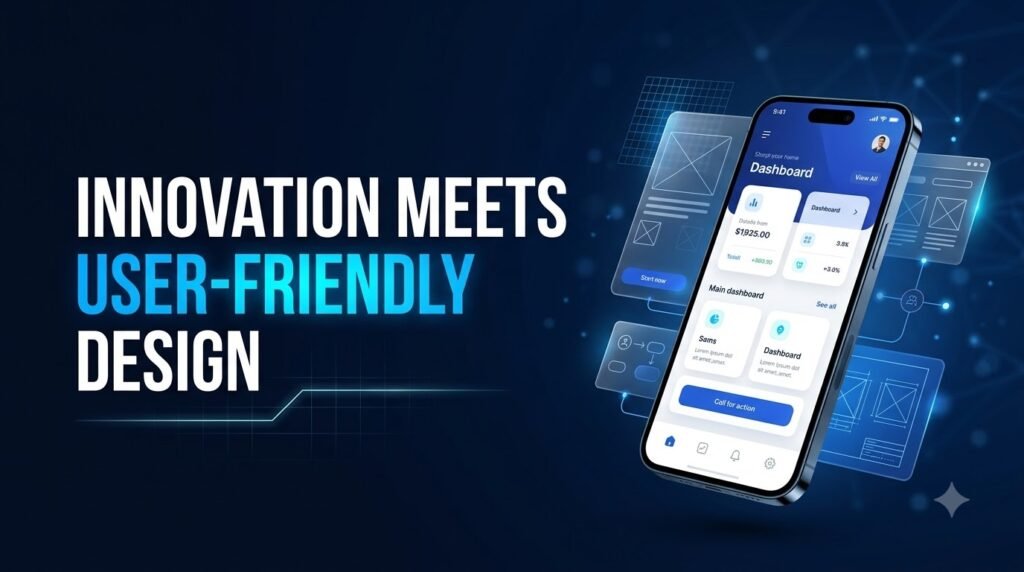





Finding the right development partner is one of the most important decisions a business makes when planning a mobile application. A successful app needs more than advanced technology, attractive screens, or a long list of features. It must solve a genuine problem, help users complete tasks easily, perform reliably across devices, and support the organisation’s wider business objectives. This is why choosing between Mobile app development companies requires a closer look at both technical expertise and design capability.
Startups may need an application that validates a business idea without unnecessary complexity, while established companies may require sophisticated integrations, automation, or personalised customer experiences. In either case, the challenge is finding developers who can turn an idea into a practical product without making the experience confusing for the people expected to use it.
The strongest development partners understand that innovation and usability are closely connected. They ask meaningful questions before recommending features, consider the needs of different users, and test their ideas before committing to a final implementation. By evaluating a team’s portfolio, design process, technical decisions, testing practices, and communication standards, businesses can make a more informed hiring decision.
Why Innovation and User-Friendly Design Must Work Together
Innovation creates value when it makes something better, faster, simpler, or more accessible. However, a feature can be technically impressive and still fail to meet its purpose if users cannot understand how to use it. An application with confusing menus, inconsistent buttons, or unnecessarily complicated registration can discourage users before they experience its main benefits.
Consider an appointment-booking application. Automated reminders, live availability, and digital payments may improve its functionality. Yet users still need to find a suitable time, understand the booking process, and receive clear confirmation. If those basic tasks are difficult, additional features will not necessarily improve the experience.
Innovation and usability should therefore be evaluated together.
-
Solve genuine customer problems: Features should address identifiable needs rather than exist simply because a technology is fashionable.
-
Simplify complex processes: Automation and thoughtful interface design can reduce the effort required to complete everyday tasks.
-
Encourage meaningful engagement: Predictable navigation and clear feedback help users understand what to do next.
-
Maintain performance and reliability: Innovative functionality must work consistently without making an application unnecessarily slow or resource-intensive.
-
Support business objectives: Design decisions should help achieve goals such as simplifying bookings, improving service delivery, or reducing manual work.
Businesses should look for developers who can explain the purpose behind their design and technology choices. The right question is not whether an app can include a particular feature, but whether that feature improves the experience and delivers a clear benefit.
What Defines Innovative Mobile App Development?
Innovative mobile app development involves using appropriate technology and thoughtful problem-solving to create useful digital experiences. It is not simply about adopting the newest framework or adding artificial intelligence to an application. Genuine innovation begins with understanding a challenge and deciding how technology can address it effectively.
Problem-Solving Through Technology
A capable development team investigates the problem before proposing a solution. This may involve reviewing existing business processes, speaking with potential users, examining customer complaints, or identifying repetitive tasks that consume time.
For example, a service business receiving appointment requests through phone calls and email may benefit from an application that combines scheduling, availability management, reminders, and customer records. The value comes from addressing a specific operational problem rather than building a complex platform without a clear purpose.
During initial discussions, ask developers to explain how they would approach your business challenge. A considered response should identify the underlying problem, potential solutions, implementation constraints, and ways to evaluate the result.
Developers should also recognise when a simpler solution is more appropriate. Not every workflow needs artificial intelligence, extensive automation, or a fully customised interface. Sound technical judgement includes knowing what not to build.
Modern Features and Technology Choices
Modern applications can incorporate several capabilities depending on their audience and objectives. Examples include AI-powered recommendations, automated workflows, real-time notifications, location-based services, digital payments, and integrations with existing business software.
However, every feature introduces practical considerations. Personalisation may require careful handling of user data. Notifications can become intrusive when sent too frequently. Location-based services need a clear purpose and appropriate permissions. Third-party integrations may involve additional costs, technical dependencies, and ongoing maintenance.
Ask prospective developers to explain why they recommend a particular technology, what alternatives they considered, and how the decision affects security, performance, usability, and future costs.
A good development partner should be able to discuss both the advantages and limitations of a proposed feature. This helps businesses distinguish meaningful innovation from unnecessary complexity.
Building Applications That Can Evolve
Business requirements rarely remain unchanged throughout an application’s lifetime. Customer expectations develop, operating systems receive updates, and organisations introduce new services or workflows.
Developers should consider these changes when planning the application’s architecture. Modular components, maintainable code, suitable documentation, and clearly defined integrations can make future improvements easier to manage.
Scalability also requires realistic planning. A startup may not need infrastructure designed for millions of users on its first release, but the application should not be structured in a way that makes reasonable growth unnecessarily difficult.
Ask how the team handles technical documentation, code quality, security updates, and new feature requests. Their answers can reveal whether they are planning for a sustainable product or concentrating exclusively on the initial launch.
Why User-Centric Mobile App Design Matters
User-centric mobile app design places the needs, expectations, abilities, and behaviour of users at the centre of product decisions. Instead of asking what the development team can build, it begins by asking what users need to accomplish and what might prevent them from doing so.
A well-designed application should make important actions easy to discover, communicate clearly, and behave consistently. These qualities need to be considered from the earliest planning stages, not added as a finishing touch after development.
Understand the Target Audience
Before designing screens, developers should understand who will use the application and why. Different audiences can have very different expectations, even when they use the same type of product.
Customer interviews, surveys, existing support queries, and competitor analysis can help uncover common problems. User personas may then summarise important audience characteristics, goals, and frustrations. These personas should reflect research rather than assumptions about what customers want.
For example, an application intended for field-service employees may prioritise quick access to job assignments, customer addresses, and status updates. A consumer shopping application may need straightforward product discovery, transparent pricing, and a frictionless checkout process.
Ask developers how they plan to gather and use information about your audience. Their response should explain how research will influence priorities, user journeys, and design decisions.
Create Intuitive Navigation and Clear User Flows
Navigation determines how easily people move through an application. A confusing structure can make even useful functionality difficult to discover.
Developers should map important user journeys before finalising the interface. These journeys describe the steps required to complete tasks such as creating an account, searching for a product, making a payment, or requesting a service.
Look for interfaces that use clear labels, predictable menus, consistent controls, and helpful feedback. Important actions should be easy to identify, while secondary options should not compete unnecessarily for attention.
The application should also communicate what happens after an action. If a payment is processing, a booking has been confirmed, or a form contains an error, users need clear and timely feedback.
During design reviews, ask the team to demonstrate common tasks from beginning to end. This is more useful than evaluating individual screens without understanding how they work together.
Design for Accessibility and Different Devices
An application should remain usable for people with different abilities, preferences, and devices. Accessibility is not limited to a small group of users; it can improve clarity and ease of use for a wider audience.
Important considerations include readable typography, sufficient colour contrast, appropriately sized touch targets, meaningful labels, and compatibility with relevant assistive technologies. Colour alone should not communicate essential information, and error messages should explain how users can correct problems.
Developers should also test layouts on different screen sizes, operating system versions, and device configurations relevant to the target audience. A screen that looks excellent on one modern smartphone may become difficult to use on a smaller device or when text is enlarged.
Ask how accessibility requirements will be incorporated into design reviews and quality assurance. A credible team should be able to explain which checks are relevant to your application and how problems will be addressed.
Validate Design Decisions Through Testing
Design reviews based only on internal opinions can miss problems that become obvious when real users interact with an application. Prototypes help teams evaluate ideas before investing heavily in development.
A wireframe provides a basic representation of screen structure, while an interactive prototype allows users to experience navigation and key interactions. Usability testing can then reveal where people hesitate, misunderstand labels, or struggle to complete tasks.
For example, if several test participants cannot find the password recovery option, the team has evidence of a navigation problem. It can revise the interface, test the revised version, and compare the results.
Testing should continue during development and before release. Feedback from support requests, analytics, and user reviews can also inform later improvements. This iterative approach helps ensure that User-centric mobile app design remains a practical development principle rather than an isolated design exercise.
How to Evaluate App Developers Before Hiring
Choosing a suitable development partner requires more than reviewing a quotation or discussing preferred technologies. Businesses should examine how a team works, how it makes decisions, and whether it can demonstrate the quality of its previous work.
Review Portfolios and Relevant Projects
A portfolio can help you understand a developer’s experience, but screenshots alone provide limited evidence. A polished image cannot show whether navigation is intuitive, forms work correctly, or the application performs reliably.
Where possible, download previous applications or request a demonstration. Test the registration process, explore menus, complete key tasks, and observe how the application responds to mistakes or interruptions.
Consider whether previous projects demonstrate:
-
Clear navigation and consistent interface patterns.
-
Functionality relevant to your proposed application.
-
Thoughtful handling of errors and unusual situations.
-
Appropriate performance across supported devices.
-
Evidence of technical complexity or integration where relevant.
Ask the team to explain its contribution to each project. This helps distinguish work completed by the developers themselves from designs, components, or functionality supplied by other parties.
A developer does not necessarily need experience in your exact industry. Strong problem-solving skills, relevant technical experience, and a willingness to understand your business can be equally valuable.
Examine Their Design and Development Process
A structured process reduces the risk of misunderstandings and expensive changes late in a project. Before hiring, ask what happens between the first consultation and the final release.
A well-planned engagement will usually include requirements discovery, scope definition, user-flow planning, wireframes or prototypes where appropriate, development milestones, quality assurance, and release preparation. The process should also establish how decisions are documented and how changes are approved.
Request examples of project deliverables, such as a requirements document, prototype, sprint plan, or testing checklist. These materials can show whether the team translates discussions into concrete work.
You should also understand how progress will be reported, who approves designs, and how unexpected technical challenges will be handled. A clear process makes responsibilities visible and helps everyone identify problems before they affect the wider project.
Assess Technical and Design Collaboration
Design and development should not operate as separate activities. A designer may propose an interaction that looks elegant but requires extensive custom engineering, creates performance problems, or conflicts with platform conventions.
Early collaboration helps identify these issues before they become expensive. Developers can explain technical constraints, designers can suggest alternatives, and product managers can prioritise the features that matter most.
During discussions, ask who will be responsible for design, development, testing, and project coordination. Find out how these people review decisions together and how disagreements are resolved.
The team should also understand the relationship between front-end interfaces, back-end services, APIs, databases, security, and performance. This broader perspective helps ensure that the finished application works as a coherent product rather than a collection of disconnected features.
Ask for Evidence of Usability Testing
During Mobile app development company selection, evidence is more valuable than promises. Ask developers to explain how they identify usability issues, gather feedback, and determine whether a design is ready for release.
Useful evidence may include prototype-testing findings, documented issues, device-compatibility checks, accessibility reviews, automated test results, and examples of design changes made after feedback.
Ask how the team handles problems discovered shortly before launch. A reliable process should explain how issues are prioritised, retested, and approved rather than treating every reported problem as equally urgent.
You should also clarify what testing is included in the quotation. Functional testing, usability testing, security checks, and performance testing address different concerns. Understanding their scope helps you compare proposals fairly and avoid unexpected gaps.
When Custom Mobile App Development Is the Right Choice
Custom mobile app development can be appropriate when a business needs functionality, integrations, or workflows that existing products cannot accommodate effectively. It provides greater control over how the application behaves and how its interface supports the organisation’s requirements.
A tailored solution may be worth considering when:
-
Business workflows are distinctive: The application must reflect processes that standard software cannot handle efficiently.
-
Integrations are essential: The product needs to connect with existing CRM, ERP, inventory, booking, payment, or reporting systems.
-
Brand experience matters: The interface must support a specific service model and a consistent customer journey.
-
Specialised functionality is required: The application needs features designed around a particular operational or customer problem.
-
Future development is expected: The business wants a planned route for adding features as requirements evolve.
However, customisation is not automatically the best option. An existing platform may already provide most of the required functionality at a lower initial cost. A customised solution can involve more discovery, design, development, testing, hosting, and ongoing maintenance.
Before committing, compare the total cost of ownership rather than the initial quotation alone. Consider future updates, security maintenance, third-party services, infrastructure, and the resources needed to support the application.
A sensible approach is to identify the essential features, validate the most important assumptions, and develop a minimum viable product when appropriate. This allows the business to test its idea before investing in a broader feature set.
Questions to Ask Developers About Innovation and User Experience
Use the following questions when interviewing prospective development partners. The aim is to understand how a team thinks, not simply whether it can provide reassuring answers.
| Question to ask | What a strong answer should demonstrate |
|---|---|
| How do you understand user needs before designing an application? | A clear discovery process involving requirements, audience research, and user journeys. |
| How do you decide which innovative features are worth building? | A method for comparing user value, feasibility, cost, risk, and business objectives. |
| Can you demonstrate applications your team has designed and developed? | Relevant examples, working demonstrations, and a clear explanation of the team’s contribution. |
| How do you test navigation, accessibility, and usability? | Appropriate testing methods, defined checks, feedback collection, and a process for resolving issues. |
| How do designers and developers collaborate during the project? | Regular reviews, shared requirements, technical input during design, and clear responsibilities. |
| How do you handle feedback and changes in requirements? | Documented change requests, impact assessments, prioritisation, and approval procedures. |
| What quality assurance and post-launch support do you provide? | A defined testing scope, release process, maintenance arrangements, and support responsibilities. |
Listen for specific examples and realistic explanations. A team that asks detailed questions about your users, budget, integrations, and business priorities is more likely to understand the actual challenge than one that immediately recommends a fixed package.
Before signing a contract, confirm the deliverables, milestones, payment terms, intellectual property ownership, source-code access, documentation, and support arrangements. These details help establish a shared understanding of what the engagement includes.
Common Mistakes to Avoid When Choosing App Developers
Even a promising development team can be the wrong fit if the selection process focuses on the wrong criteria. Avoid these common mistakes when comparing proposals.
-
Choosing only by the lowest price: A low quotation may exclude testing, documentation, maintenance, or important functionality. Compare the full scope and expected long-term costs.
-
Confusing visual appeal with usability: Attractive screens do not guarantee an intuitive experience. Test real user journeys and check whether people can complete tasks without assistance.
-
Prioritising trends over user needs: AI, automation, and other modern capabilities should solve identifiable problems. Remove features that add complexity without a clear benefit.
-
Ignoring accessibility, security, and performance: Include these requirements in the project scope from the beginning rather than treating them as optional improvements.
-
Skipping prototype reviews and usability testing: Review early designs with representative users and address recurring problems before they become expensive to fix.
-
Overlooking code ownership and maintenance: Confirm who owns the deliverables, how source code will be handed over, and what documentation and ongoing support are included.
-
Accepting unrealistic deadlines or vague scopes: Establish measurable milestones, clear acceptance criteria, and a process for approving changes. Be cautious of guarantees that are not supported by a credible plan.
The best choice is not necessarily the largest agency or the cheapest freelancer. It is the development partner whose experience, working methods, communication, and technical capabilities match the demands of your project.
Choosing Ambient Infotech for Your Mobile App Project
Businesses evaluating development partners can consider Ambient Infotech alongside other suitable providers. The company’s official website describes mobile app development services focused on Android and iOS applications, performance, security, scalability, and user experience. Its published service information also covers AI-powered applications, cross-platform development, prototyping, and minimum viable product (MVP) development.
For a business seeking a partner that can combine modern functionality with practical design, the next step is to assess these capabilities against its own requirements. Review the Ambient Infotech mobile app development page to understand the published service offering and the approaches described for application development.
Prospective clients should also ask for relevant working examples, clarify the proposed design and testing process, and discuss the technologies suitable for their intended application. If cross-platform development is under consideration, ask how the team would assess the trade-offs between a shared codebase and platform-specific implementation.
The project discussion should establish the expected functionality, target users, integrations, budget, delivery milestones, security requirements, and post-launch responsibilities. These details make it easier to judge whether the proposed solution is practical and aligned with the business’s objectives.
Ambient Infotech also provides a that prospective clients can review as part of their evaluation.
As with any provider, examine the available evidence, ask questions about the team’s contribution, and compare its proposal with other qualified options before making a decision.
Conclusion
Finding app developers who combine innovation with usability requires a balanced evaluation of design thinking, technical expertise, business understanding, and quality assurance. Modern features can create opportunities, but their value depends on whether they solve genuine problems and remain straightforward to use.
Review working applications rather than relying on screenshots, ask how user research informs design, and examine how developers test their work. Pay equal attention to architecture, accessibility, security, documentation, and long-term maintenance. These factors influence whether an application remains useful after its initial release.
When comparing Mobile app development companies, look for a team that can explain its decisions, demonstrate relevant experience, and adapt its approach to your project’s needs. Strong Innovative mobile app development should support a clear purpose, while User-centric mobile app design should make the resulting product practical for its intended audience.
A careful Mobile app development company selection process also means deciding whether Custom mobile app development is genuinely necessary and agreeing on measurable project expectations before work begins.
Ultimately, the right partner is one that understands both what your business wants to achieve and what your users need to accomplish. Evaluate potential developers on evidence, collaboration, and suitability rather than promises alone.