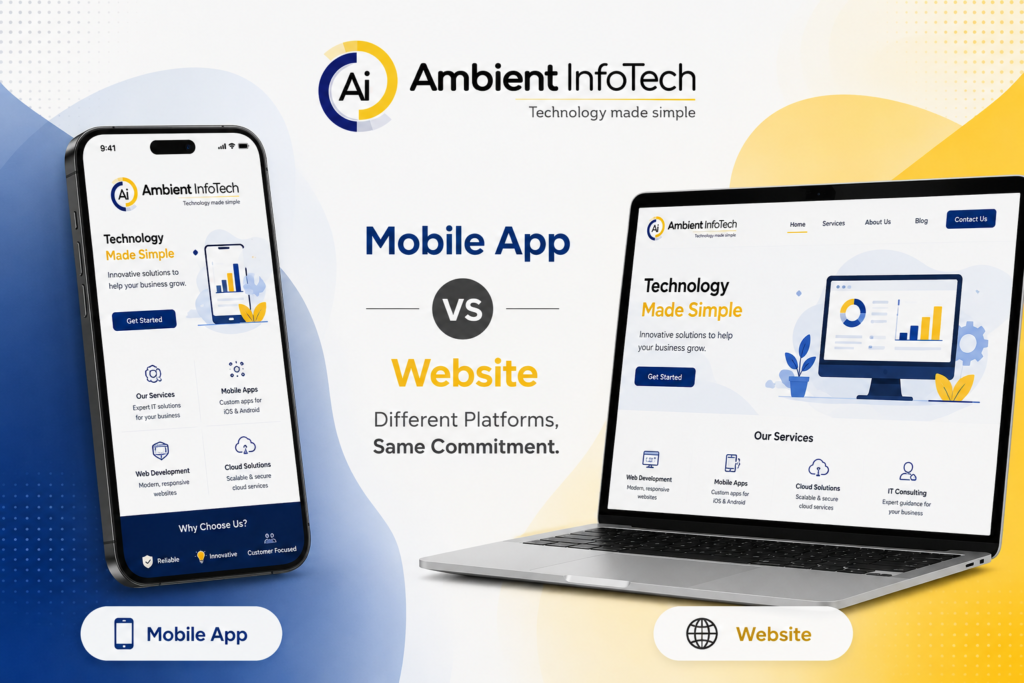





One of the most common questions modern business owners ask is whether they should invest in a mobile app or a website first. With customers spending more time online than ever before, having a digital presence is no longer optional—it’s essential. However, deciding between the two can feel confusing, especially for startups and growing businesses working with limited budgets.
The debate around mobile app vs website often comes down to business goals, customer behaviour, scalability, and long-term growth strategy. While websites are generally more accessible and cost-effective, mobile apps offer deeper engagement and personalised user experiences. The right decision depends on what your business needs today and where you want it to grow tomorrow.
In this guide, we’ll break down the major differences between websites and mobile apps, compare costs, explore scalability, and help you determine which option is the smarter investment for your business.
Direct Answer
In the mobile app vs website debate, websites are ideal for visibility, accessibility, and cost-effective online presence, while mobile apps are better for customer engagement, personalised experiences, and advanced functionality. Businesses should choose based on budget, goals, audience behaviour, and growth plans.
Understanding the Difference Between a Website and a Mobile App
Before deciding, it’s important to understand how websites and apps function differently.
A website is accessed through internet browsers and works across multiple devices such as desktops, tablets, and smartphones. A mobile app, on the other hand, is installed directly on a user’s device and offers a more customised experience.
Businesses often start with business website development because it provides instant online visibility and helps customers discover services through search engines. Apps are usually introduced later when businesses want stronger engagement, push notifications, or advanced features.
When a Website Is the Right Choice
For many businesses, especially startups and local service providers, a website is the best starting point.
A professionally designed website allows customers to learn about your services, contact your business, and even make purchases without needing to install anything. This makes websites highly accessible and easier to market through SEO and Google search rankings.
A responsive business website is particularly effective for:
- Small businesses and startups
- Service providers
- Informational platforms
- Businesses focused on SEO and online visibility
- Companies with limited budgets
Websites are also easier to update and maintain. Changes can be made instantly without requiring users to download updates like they would with apps.
When a Mobile App Is the Better Choice
While websites are excellent for visibility, apps are designed for engagement and retention. Businesses that require frequent interaction with users often benefit more from mobile app development.
Apps are especially useful when your business needs features like:
- Push notifications
- Offline access
- Loyalty programs
- Real-time tracking
- Personalised user experiences
- Advanced integrations
Industries such as food delivery, ecommerce, fitness, banking, and social networking heavily rely on custom mobile app development because apps create smoother and faster user experiences.
For example, customers are more likely to regularly use a shopping app than repeatedly visit a website because apps provide convenience and personalised recommendations.
Mobile App vs Website Cost Comparison
One of the biggest deciding factors in the website vs app cost comparison discussion is budget.
| Feature | Website | Mobile App |
|---|---|---|
| Initial Cost | Lower | Higher |
| Development Time | Faster | Longer |
| Maintenance | Easier | More Complex |
| SEO Benefits | Strong | Limited |
| User Engagement | Moderate | High |
| Offline Access | No | Yes |
| Platform Dependency | Browser-based | iOS/Android |
A standard business website may cost significantly less than a mobile app because app development requires separate optimisation for Android and iOS platforms.
However, while apps require a higher investment, they often deliver better long-term engagement and customer retention.
User Experience Differences
User experience is another major factor in the mobile app or website for business decision.
Websites are excellent for first-time visitors because they are easy to access through search engines and links. Customers don’t need to install anything, which lowers friction.
Apps, however, create a more immersive experience. They are faster, smoother, and more interactive because they are designed specifically for mobile devices. Features such as biometric login, camera access, and location tracking enhance usability significantly.
Businesses focused on repeat engagement usually see better results with apps.
SEO and Discoverability
One major advantage websites have over apps is discoverability.
With website development services, businesses can optimise pages for Google rankings, attract organic traffic, and generate leads through search engines. This makes websites powerful marketing tools.
Apps, on the other hand, depend heavily on app store visibility and existing brand recognition. Without strong marketing, apps can struggle to gain downloads.
Scalability and Business Growth
Scalability should always be part of your long-term digital strategy.
A website is easier to scale in the early stages because updates and content additions are relatively straightforward. Businesses can quickly add landing pages, blogs, ecommerce features, and integrations.
Apps become valuable when businesses require advanced functionality and personalised customer experiences. Companies investing in scalable business app solutions often focus on long-term retention and automation.
The ideal approach for many growing companies is to start with a website and later expand into an app once user demand increases.
Which Industries Need Apps More?
Some industries naturally benefit more from apps than websites.
| Industry | Better Option |
|---|---|
| Restaurants & Delivery | Mobile App |
| Ecommerce | Both |
| Local Services | Website |
| Healthcare | Both |
| Banking & Finance | Mobile App |
| Education | Both |
| Corporate Business | Website |
Simple Decision Guide for Business Owners
If you’re still confused about mobile app vs website, here’s a simple way to decide:
Choose a Website If:
- You need online visibility quickly
- SEO and Google traffic matter
- You have a limited budget
- Your audience only needs basic access to information
Choose a Mobile App If:
- Customer engagement is your priority
- Users interact frequently with your platform
- You need advanced functionality
- Personalisation and retention matter
Choose Both If:
Your business is scaling rapidly and you want maximum visibility plus long-term engagement.
Common Mistakes Businesses Make
Many businesses rush into app development without validating demand first. Others rely only on websites and ignore mobile engagement opportunities.
The smartest approach is to align technology decisions with actual business goals instead of trends.
Expert Insight
A website helps customers discover your business. A mobile app helps them stay connected to it. Successful businesses understand how both platforms work together rather than treating them as competitors.
How Ambient Infotech Helps Businesses Choose the Right Solution
Choosing between a website and an app requires technical expertise and strategic planning. Ambient Infotech helps businesses evaluate their goals, audience behaviour, and scalability requirements before recommending the right digital solution.
Whether you need website development services, custom mobile app development, or a complete digital transformation strategy, Ambient Infotech creates scalable and user-focused solutions tailored to business growth.
From startups to enterprises, businesses partner with Ambient Infotech to build platforms that are fast, secure, and future-ready.
Conclusion
The decision between a website and a mobile app depends entirely on your business objectives, customer expectations, and growth strategy.
Websites are essential for visibility, SEO, and accessibility, while apps provide stronger engagement, convenience, and long-term customer retention. In many cases, businesses achieve the best results by combining both strategically.
If you’re unsure which solution is right for your business, getting expert guidance can save both time and money.
Talk to Ambient Infotech to explore scalable website and mobile app solutions designed for long-term business growth.
FAQ
Q1: Is a website better than a mobile app for startups?
For most startups, websites are better initially because they are affordable, accessible, and easier to market through SEO.
Q2: Why do businesses need mobile apps?
Apps improve engagement, retention, and user experience through personalised features and faster interactions.
Q3: Which is more expensive, a website or a mobile app?
Mobile apps are generally more expensive because they require platform-specific development and ongoing updates.
Q4: Can a business have both a website and an app?
Yes, many successful businesses use both to maximise visibility and customer engagement.
Q5: Are websites still important in 2026?
Yes, websites remain critical for SEO, credibility, lead generation, and online discoverability.
Q6: What industries benefit most from mobile apps?
Ecommerce, food delivery, banking, healthcare, and fitness industries benefit heavily from apps.
Q7: How long does it take to build a mobile app?
Development timelines vary, but most apps take several months depending on complexity.
Q8: How do I decide between an app and a website?
Evaluate your goals, budget, audience behaviour, and required features before making a decision.