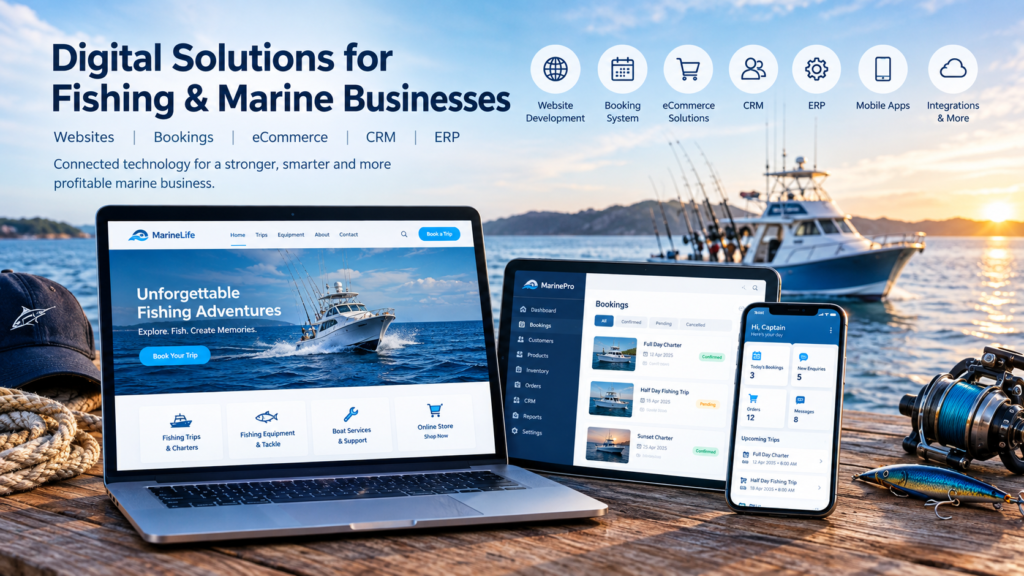

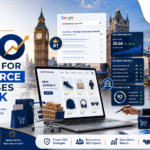

Running a fishing or marine business involves far more than putting boats, equipment or services on a website. You may be handling trip enquiries, charter bookings, customer conversations, product orders, inventory, payments, staff schedules and follow-ups at the same time.
When these activities are managed through separate spreadsheets, emails, WhatsApp conversations and disconnected systems, information can easily get lost.
That is where digital solutions for fishing and marine businesses can make a practical difference.
A properly connected digital platform can bring your website, bookings, customers, products, payments and internal operations together. Instead of simply acting as an online brochure, your website can become a genuine business and sales platform.
Ambient Infotech has experience working with fishing and marine businesses, including JustFishing Group and e-Marine Hub, providing practical exposure to fishing trips, destination-based searches, online fishing gear sales and marine equipment eCommerce.
What Are Digital Solutions for Fishing and Marine Businesses?
Digital solutions for fishing and marine businesses are connected websites, software and business systems designed around the operational needs of fishing, charter, marine, tackle and equipment companies.
These solutions can include fishing website development, online bookings, eCommerce, customer management, inventory, ERP, custom dashboards, payment gateways, WhatsApp integration, mobile applications and third-party APIs.
The objective is simple: help customers take action online while giving your internal team better control over enquiries, bookings, products, orders and operations.
Why Fishing and Marine Businesses Need More Than a Standard Website
A basic website may tell visitors what a business does, but modern customers often expect to do more.
Someone looking for a fishing charter may want to check availability and request a booking. A customer purchasing equipment may expect product search, filters, secure checkout and online payment. A business owner may need to know which enquiries are still waiting for a response.
These are very different requirements from a simple five-page company website.
The attached business document specifically highlights websites that can support enquiries, bookings, product sales, customer management and day-to-day operations rather than simply displaying services.
A connected system can therefore create a smoother journey:
Customer → Website → Enquiry / Booking / Order → Admin Panel → CRM / ERP → Confirmation → Follow-up
This approach can help reduce unnecessary manual work while keeping important customer and business information in one connected workflow.
How Fishing Website Development Can Support Your Business
Your website should be designed around what customers actually need to do.
For a fishing charter, that could mean finding a suitable trip and submitting a booking request. For a tackle retailer, it could mean searching products and completing an order.
A properly planned fishing website development project can include features such as:
- Fishing trip and charter booking
- Boat and service listings
- Availability management
- Fishing equipment eCommerce
- Product categories and filters
- Product search
- Request-a-quote functionality
- Plan-your-trip enquiries
- WhatsApp integration
- Online payments
- Customer accounts
- Booking history
- Automated email or SMS notifications
Strong calls to action such as “Book a Trip”, “Check Availability”, “Request a Quote”, “Plan Your Trip” and “WhatsApp Us” can make it easier for visitors to move from browsing to enquiry or purchase.
Build Around the Customer Journey
Imagine a visitor searching online for a fishing trip.
They discover your website, explore available experiences, check relevant information and submit an enquiry. The enquiry can then enter your internal system rather than sitting inside an email inbox.
The team can respond, provide pricing, confirm details and eventually turn that enquiry into a booking.
That is much more useful than simply giving the visitor a phone number and hoping they call.
Marine Website Development for Different Business Models
Not every marine company operates in the same way.
A fishing charter, marine service provider, equipment wholesaler and tackle shop may require completely different website functionality.
That is why marine website development should begin with the business process rather than a predefined template.
Depending on the business, a platform could support:
Fishing Charters
Charter operators can use online trip discovery, availability information, enquiries and booking workflows.
Marine Services
Service companies can use service listings, enquiry forms, quote requests and customer communication tools.
Fishing Equipment Retailers
Retail businesses can use product catalogues, categories, search, filters, shopping carts and secure checkout.
Distributors and Wholesalers
Larger suppliers may require product management, inventory control, purchasing, sales orders and business reporting.
Marine eCommerce Businesses
An online marine store can connect customers with products while linking orders and stock information with internal systems.
The document highlights this broader approach, covering fishing charters, fishing trip businesses, tackle shops, equipment stores, distributors, wholesalers and eCommerce businesses.
Fishing Booking System: Turn Trip Enquiries Into Organised Bookings
For charter and fishing-trip businesses, bookings are central to revenue.
A fishing booking system can provide a structured way to manage the customer journey from the first enquiry through to the completed trip.
A typical workflow could look like:
Enquiry → Follow-up → Quote → Booking → Completed Trip → Repeat Customer
Instead of keeping information across separate spreadsheets and conversations, the booking information can be connected to customer records.
Your team may be able to manage:
- Customer details
- Trip information
- Previous bookings
- Availability
- Boat information
- Crew assignments
- Payments
- Follow-ups
- Communication notes
This can be particularly useful when a business handles a high volume of enquiries or repeat customers.
The source document describes CRM workflows that connect enquiries, follow-ups, quotes, bookings, completed trips and repeat customers.
Marine eCommerce Solutions for Fishing Equipment and Tackle
Selling fishing equipment online introduces another set of requirements.
A customer searching for rods, reels, lines, lures, jigs, tackle or apparel needs a simple way to find the right product.
Marine eCommerce solutions can bring these activities into one online shopping journey:
Products → Categories → Search & Filters → Cart → Secure Checkout → Payment → Order Confirmation → Fulfilment
A larger catalogue may also require advanced filtering and structured product management.
For example, customers might want to narrow products by category, type, brand, size or other relevant characteristics.
The attached document specifically describes eCommerce platforms for tackle shops, fishing equipment suppliers and marine product businesses, including search, filters, categories, cart, checkout, payment and fulfilment.
Connect Your Store With Inventory
An online store becomes more useful when it works alongside internal stock management.
Instead of updating website products manually and separately tracking warehouse stock, businesses can connect their online store with inventory and business management systems.
This can provide better visibility into products, stock, orders and sales.
Custom Admin Panel: One Control Centre for Your Business
A growing fishing or marine company may have many different activities happening behind the scenes.
A custom admin panel can bring these functions into one central interface.
Depending on requirements, your team could manage:
- Customers and enquiries
- Fishing trips and bookings
- Boats and crew
- Availability
- Products and orders
- Payments
- Staff assignments
- Website content
- Reports
- Business activity
The source material describes the admin panel as a central control centre that can connect directly to a new or existing website. It can also be developed separately and integrated with an existing website.
This is particularly useful for businesses that already have a website but need stronger internal management.
You do not necessarily have to replace everything.
A new operational layer can sometimes be connected to the existing digital setup.
Fishing CRM: Keep Every Customer Conversation Organised
Customer enquiries can arrive through websites, email, WhatsApp and other channels.
Without a proper system, sales teams may struggle to remember:
- Who contacted the business
- What they asked for
- Whether a quote was sent
- When someone needs a follow-up
- What they booked previously
- Which employee is handling the enquiry
A fishing CRM can organise this information into a single customer record.
For example, a customer who booked a fishing trip last year could have their previous booking, preferences, communication history and follow-up information stored for future reference.
This gives the team a clearer picture of the customer journey.
The document explains that CRM functionality can maintain customer details, enquiry history, previous bookings or orders, preferences, follow-ups, communication notes, lead sources and staff assignments.
From One-Time Customer to Repeat Customer
The real value of customer data is not simply storing names.
It can help businesses understand relationships over time.
A customer who has previously purchased equipment or booked a trip may be interested in another relevant experience or product later.
With organised records and appropriate follow-up processes, businesses can build stronger repeat-customer relationships.
Marine ERP Solutions for Stock, Purchasing and Operations
If your company sells products or manages inventory, customer-facing technology is only one part of the picture.
Marine ERP solutions can connect areas such as purchasing, sales, stock, warehouses, invoices and payments.
A purchasing workflow may look like:
Supplier → Purchase Request → Purchase Order → Goods Received → Supplier Invoice
A sales workflow can follow:
Customer → Sales Order → Invoice → Payment → Fulfilment
This type of connected process can help teams manage products, SKUs, inventory levels, warehouses, purchasing, sales orders, invoices, payments and stock movements.
For a marine equipment business with a large catalogue, having this information connected can make everyday operations easier to monitor.
The Benefits of a Connected Fishing Business Platform
The biggest opportunity is not any single feature.
It is the connection between them.
Consider a customer purchasing fishing equipment online.
The website receives the order. The admin panel displays it. Inventory information can be checked. The order can move through fulfilment. Customer information remains available for future communication.
A similar process can happen for a fishing charter.
The customer submits a booking request, the team receives it, customer information enters the CRM, availability is managed and the customer receives confirmation.
According to the supplied document, a connected platform can help businesses generate enquiries and bookings, simplify purchasing, respond faster, reduce manual data entry, organise customer information, improve inventory management and track business activity.
Website, CRM and ERP: How Do They Work Together?
| System | Main Purpose | Example Use |
|---|---|---|
| Website | Customer-facing experience | Services, products, bookings |
| Booking System | Manage reservations | Fishing trips and charters |
| Admin Panel | Central control | Bookings, staff, products |
| CRM | Manage customer relationships | Enquiries and follow-ups |
| ERP | Manage business operations | Stock, purchasing and sales |
| eCommerce | Online selling | Fishing and marine equipment |
| Mobile App | Mobile customer/team access | Bookings, services or operations |
| APIs | Connect platforms | Payments, third-party services |
The important point is that these systems do not have to operate independently. They can be designed to exchange relevant information as part of one broader digital ecosystem.
Digital Solutions for Fishing and Marine Businesses: A Step-by-Step Approach
Building a digital platform should not begin with technology alone.
Start with the business.
Step 1: Understand Your Business Model
Determine whether you operate as a charter company, tackle retailer, equipment supplier, marine service provider, distributor, wholesaler or another type of marine business.
Step 2: Map the Customer Journey
Identify what happens from the first website visit to enquiry, quote, booking, purchase, fulfilment and follow-up.
Step 3: Identify Manual Tasks
Look for repetitive processes involving spreadsheets, emails, WhatsApp messages or duplicate data entry.
Step 4: Select the Required Systems
Depending on your needs, this could include a website, booking system, CRM, ERP, eCommerce platform, mobile app or custom admin panel.
Step 5: Connect the Systems
APIs and third-party integrations can allow relevant information to move between platforms.
Step 6: Improve the Customer Experience
Make important actions easy to find, whether that means booking a trip, requesting a quote, purchasing equipment or contacting your team.
Step 7: Measure and Improve
Track enquiries, bookings, sales, customer activity and operational performance so the platform can evolve with the business.
What About Existing Websites?
Replacing an existing website is not always necessary.
Some businesses already have a functioning website but lack the operational software required behind it.
In this situation, a separate custom admin panel or CRM/ERP layer can potentially be integrated with the existing website.
This approach can be useful when the current website already has valuable content, search visibility or an established customer base.
The supplied document specifically notes that an admin panel can be developed separately and connected to an existing website.
Mobile Apps, WhatsApp, Payments and APIs
A modern fishing or marine platform can extend beyond the website.
The supplied material identifies mobile apps, WhatsApp integration, payment gateways, APIs and third-party integrations as possible extensions.
Each can serve a different purpose.
WhatsApp integration can make enquiries more convenient for customers.
Payment gateways can support online transactions.
APIs can connect external systems.
Mobile apps can provide another channel for customers or internal teams.
The right combination depends on how the business operates. Adding technology simply because it is available can create unnecessary complexity.
SEO for Fishing and Marine Businesses
A technically strong website still needs to be discoverable.
SEO can help fishing and marine businesses target searches related to their products, services, destinations and locations.
For example, relevant search themes could include fishing charters, fishing trips, marine equipment, tackle shops, boat services and fishing gear.
A useful SEO strategy should combine:
- Search intent research
- Helpful service and product content
- Technical SEO
- Internal linking
- Local SEO where relevant
- Structured content
- Mobile-friendly performance
- Clear calls to action
The goal is not simply to attract visitors. It is to attract people who have a genuine reason to enquire, book or purchase.
Common Mistakes to Avoid
Treating the Website as an Online Brochure
A website that only describes your services may miss opportunities to generate direct enquiries, bookings and sales.
Managing Everything Through Spreadsheets
Spreadsheets can be useful, but relying on them for every customer, booking and stock process can become difficult as operations grow.
Keeping Customer Data in Separate Places
When information is split between email, WhatsApp and different files, employees may not have a complete view of the customer.
Building Too Many Features at Once
A successful digital platform does not need every possible feature on day one. Start with the processes that create the most practical value.
Ignoring Internal Operations
The customer-facing website is only one side of digital transformation. Booking, inventory, purchasing, fulfilment and customer management also matter.
How Ambient Infotech Can Help Fishing and Marine Businesses
Ambient Infotech approaches fishing and marine technology as a broader business solution rather than simply a website project.
The supplied company document highlights hands-on experience with JustFishing Group and e-Marine Hub, providing exposure to fishing trips, destinations, fishing equipment sales and marine eCommerce operations.
Solutions can be developed around the actual requirements of a business, including:
- Website development
- Fishing and charter booking
- eCommerce
- Custom admin panels
- CRM
- ERP
- Mobile applications
- WhatsApp integration
- Payment gateways
- APIs and third-party integrations
- SEO and performance optimisation
- Cloud/VPS
- Security and backups
These capabilities are also outlined in the supplied document.
Ambient Infotech’s document states 12+ years of industry experience and 1,200+ projects delivered globally, with contact details provided for businesses seeking to discuss a digital fishing or marine platform.
Frequently Asked Questions
1. What are digital solutions for fishing and marine businesses?
They are connected digital systems such as websites, booking platforms, eCommerce, CRM, ERP, admin panels and integrations designed around fishing and marine business operations.
2. Can a fishing charter accept bookings online?
Yes. A fishing website can be developed with trip discovery, availability, booking enquiries, customer accounts, payments and automated notifications, depending on the business requirements.
3. Can a marine equipment company sell products online?
Yes. An online marine store can include product categories, search, filters, shopping carts, secure checkout, payments and order fulfilment.
4. Why does a fishing business need a CRM?
A CRM can organise customer details, enquiries, follow-ups, quotes, previous bookings, communication history and staff assignments in one place.
5. Can an existing fishing website be connected to new software?
Yes. Depending on the existing technology, a new admin panel, CRM, ERP or other system can potentially be integrated with an existing website through APIs or other suitable methods.
Conclusion: Build a Digital Platform Around Your Marine Business
The future of fishing and marine business technology is not simply about having a better-looking website.
It is about creating a connected system that supports the complete customer and operational journey.
A charter company may need online trip discovery and bookings. A tackle shop may need eCommerce and inventory management. A marine equipment supplier may need CRM, ERP and product management. A growing business may need all of these systems working together.
That is where digital solutions for fishing and marine businesses become valuable.
With the right combination of fishing website Design, booking technology, marine eCommerce solutions, fishing CRM, marine ERP solutions, integrations and custom software, your digital platform can become an active part of your business operations rather than simply an online presence.
Ambient Infotech can help businesses plan and develop connected digital solutions around their actual workflows, from customer-facing websites to internal systems.
Ready to turn your fishing or marine website into a business and sales platform? Contact Ambient Infotech to discuss your requirements and build a solution around the way your business actually operates.